Taking The Tablet Away
Isn't The Hard Part.
What Happens Next Is.
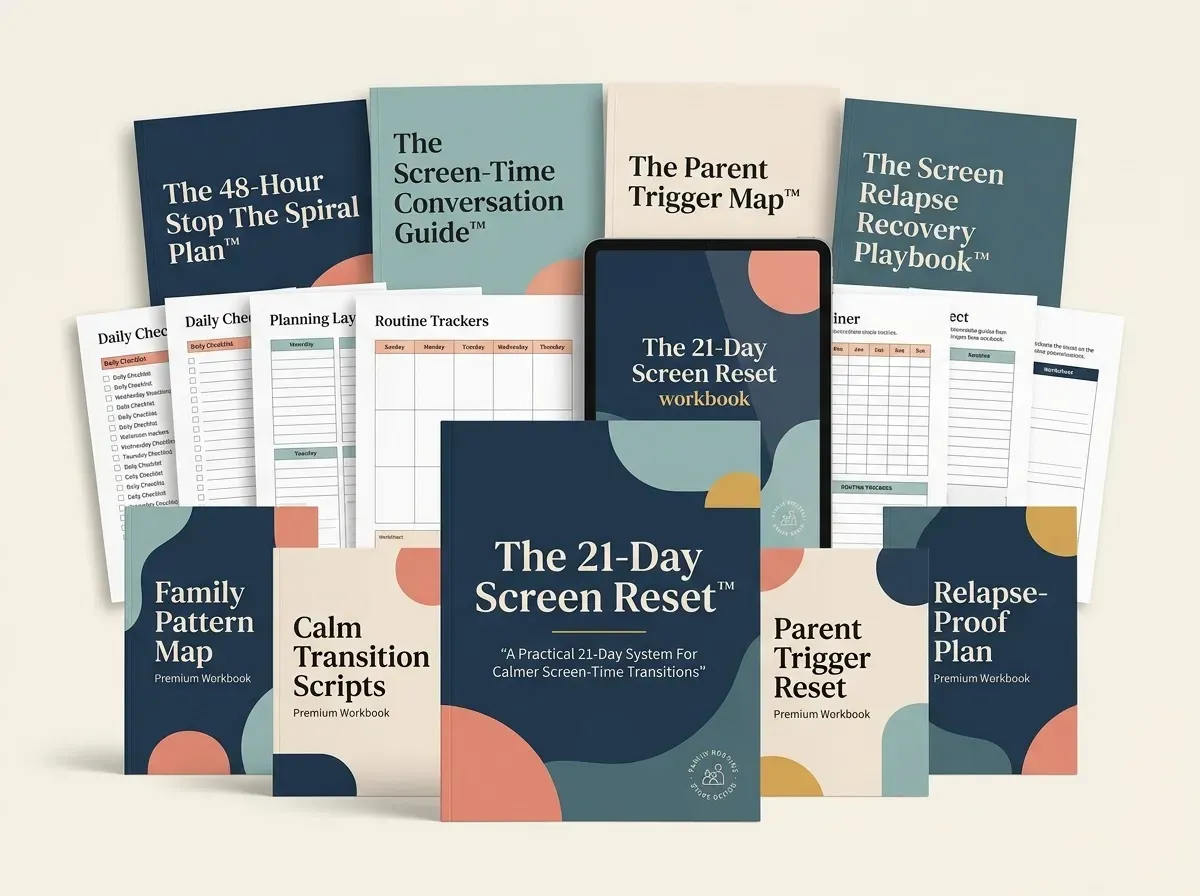
The 21-Day Screen Reset™ gives you a practical daily system for creating calmer screen-time transitions — without turning every limit into another argument — plus 140 off-screen activities for the moments when a screen isn't an option.
Know what to say before resistance escalates
Create predictable screen-to-off-screen routines
Respond more calmly when things don't go to plan
YES — I WANT CALMER SCREEN-TIME TRANSITIONS →
The 21-Day Screen Reset™
140 Off-Screen Activities
Family Pattern Map
Calm Transition Scripts
Parent Trigger Reset
Relapse-Proof Plan
Calm Script Builder
See Exactly What's Inside The Calm Script Builder
Pick what's happening right now and get a preview of the real script you'd get — free, no signup needed.
💬 Right Now
🛡️ Next Time
Two Voices Behind The 21-Day Screen Reset™

Nana Wren
I raised four kids and watched eleven grandkids grow up glued to one screen or another. Somewhere around grandkid number seven, I stopped fighting the screen — and started fixing what happens around it.

Coach Reed
Nana Wren's wisdom is where this started. My job is turning it into something you can actually follow on a hard Tuesday — a repeatable system, not just good intentions.
You Set The Limit.
Then The Real Battle Begins.
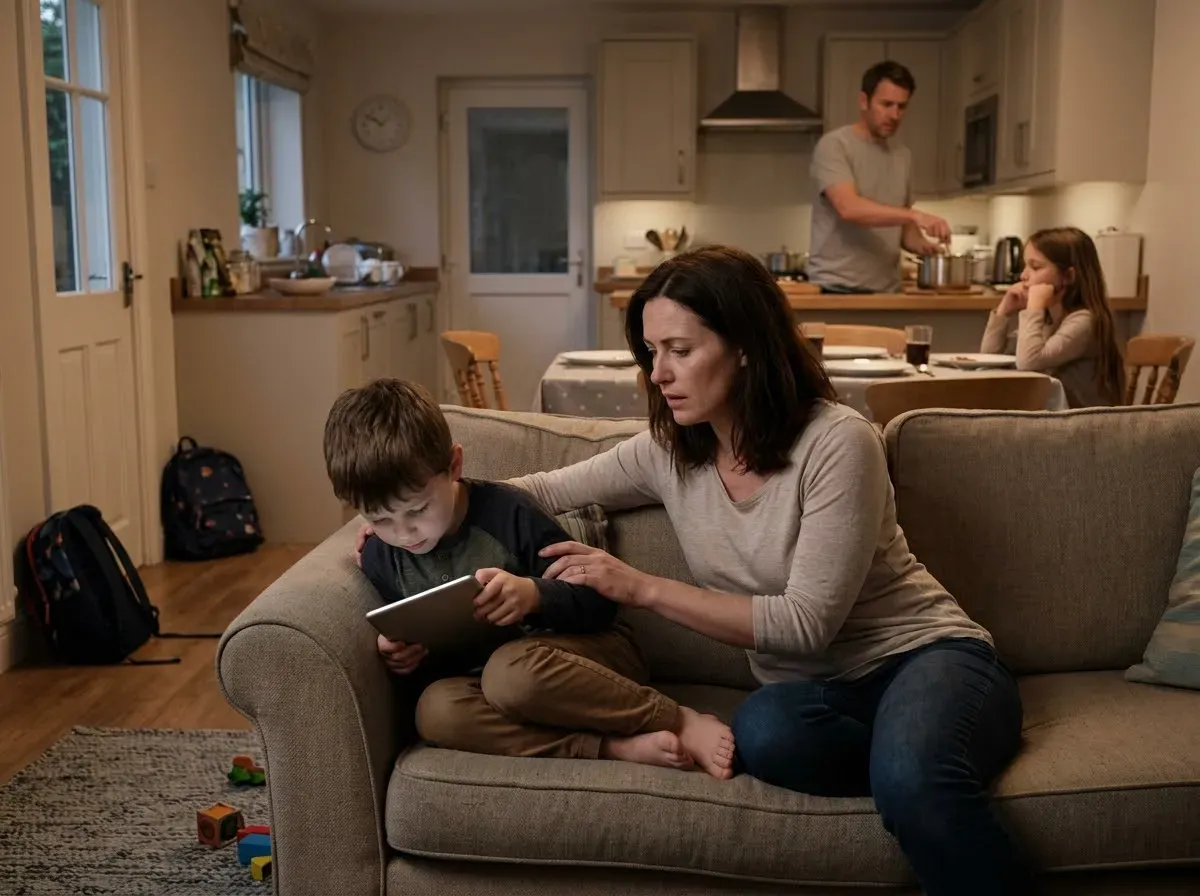
It's 5:47 PM. Dinner is almost ready. You've already asked more than once.
“Five more minutes.”
“I'm almost done.”
“That's not fair.”
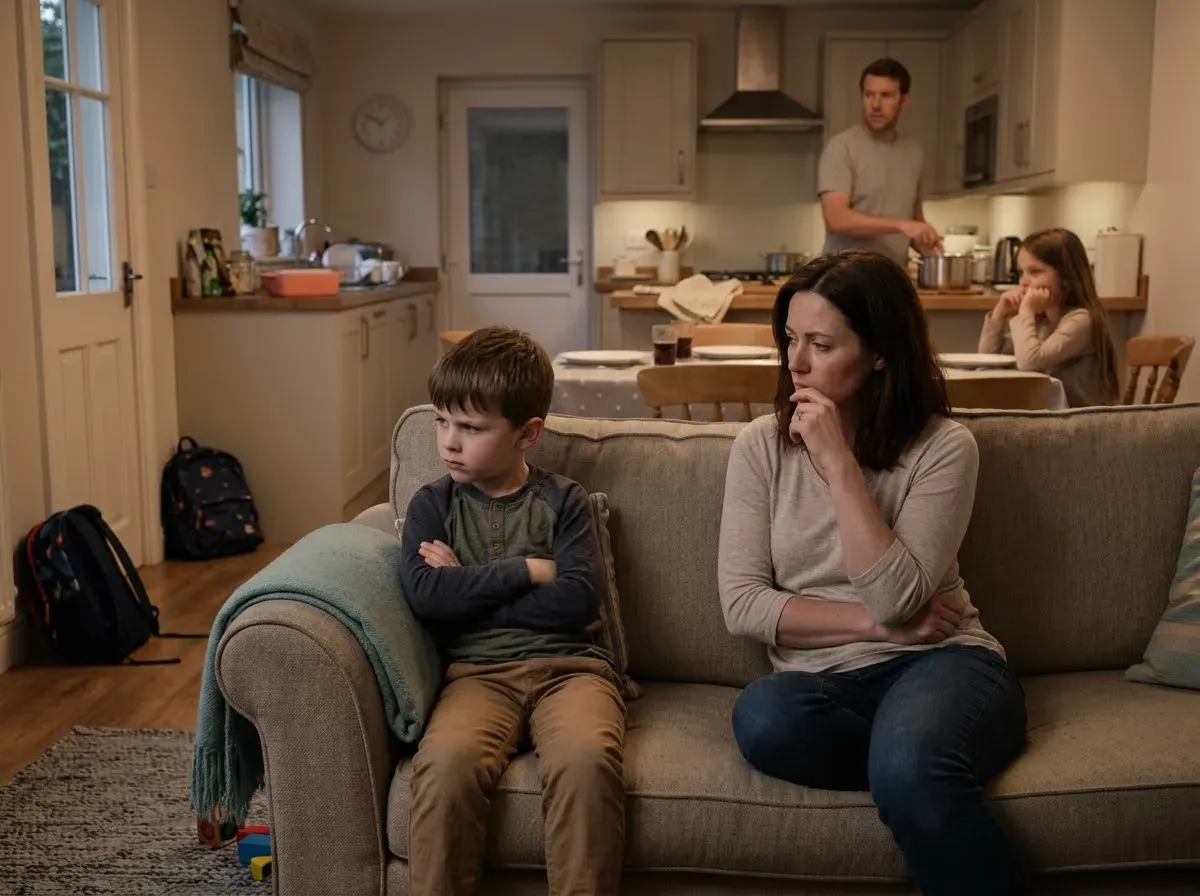
Eventually the device goes away — but now you're managing frustration, negotiation, tears, anger or a child who has no idea what to do next.
That's why simply removing the screen often doesn't solve the part of the problem that keeps exhausting parents.
It's a repeatable way to manage the transition surrounding the rule.
Introducing The Transition-First Method™
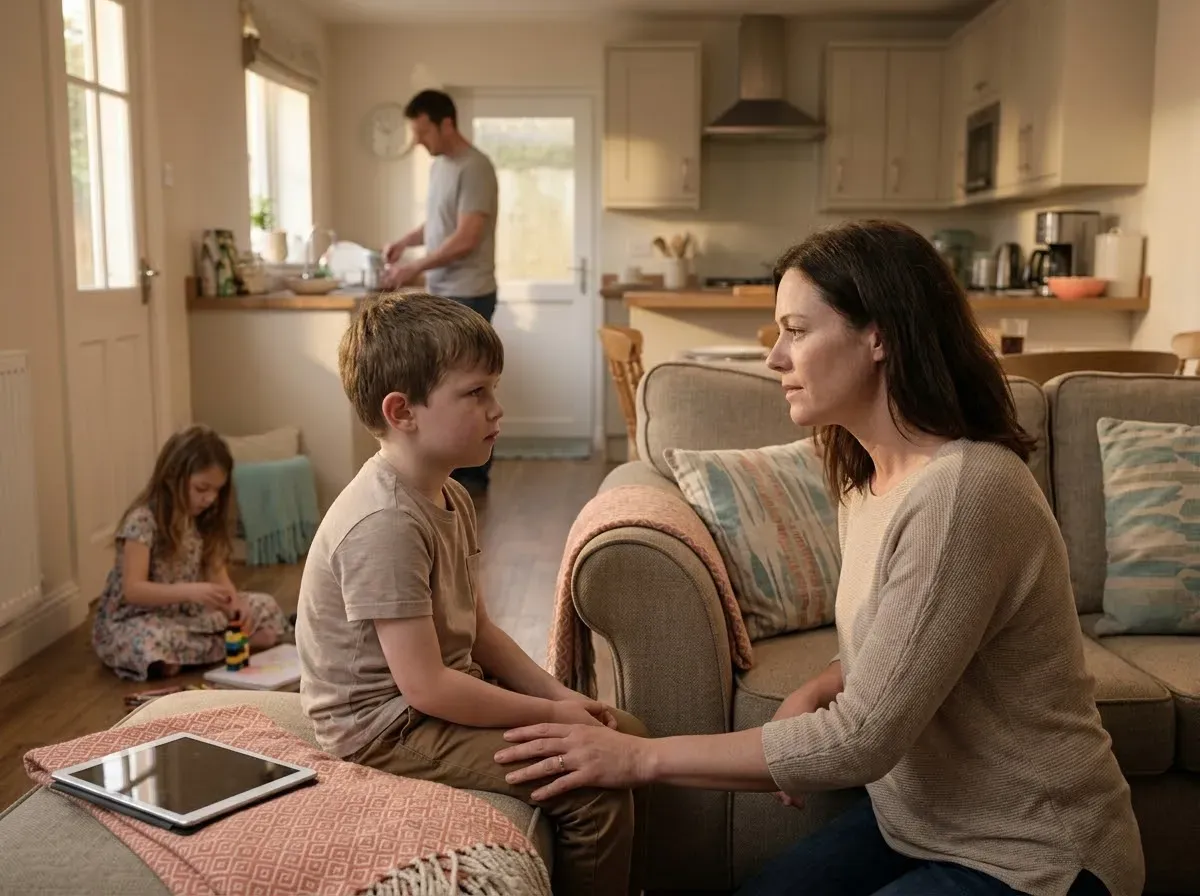
Because managing the device is only one part of the equation. The 21-Day Screen Reset™ helps you work on what happens before, during and after the screen turns off.
Prepare The Transition
Create predictable expectations before your child is already emotionally locked into the screen.
Use A Clear Response
Follow prepared language and routines instead of improvising once resistance begins.
Make The Next Step Easier
Help the family move into what comes next instead of leaving a frustrating void after the screen disappears.

A Timer Manages The Device.
This Manages The Transition.
The Usual Approach
Set a time limit
Give repeated warnings
React after resistance starts
Depend on willpower
Start over after a difficult day
Transition-First™
Build predictable routines
Prepare your words in advance
Plan what happens next
Manage parent triggers too
Have a recovery plan
START MY 21-DAY RESET →

You Don't Have To Figure It Out Day By Day.
The Screen Reset™ breaks the process into practical stages so you know what to focus on instead of improvising every evening.
01 · Family Pattern Map
Identify where, when and why your hardest screen transitions happen.
02 · 21-Day Daily Routine
Follow a clear sequence for gradually reshaping the family routine.
03 · Calm Transition Scripts
Use prepared language when it's time to move away from the screen.
04 · Parent Trigger Reset
Recognize the moments when your own frustration makes the cycle harder.
05 · Relapse-Proof Plan
Know what to do after weekends, travel or difficult days disrupt the routine.
Because Real Family Life Doesn't Follow A Perfect Plan.
You'll also get four practical resources for the moments when the routine gets tested.
The 48-Hour Stop The Spiral Plan™
A focused reset when screen-time tension suddenly gets worse.
The Screen-Time Conversation Guide™
Extra language for talking about boundaries more clearly.
The Parent Trigger Map™
Spot the situations that make it harder for you to stay consistent.
The Screen Relapse Recovery Playbook™
A way back into the routine after disruption.
Build A Screen-Time Routine Your Family Can Actually Repeat.
Get instant access to The 21-Day Screen Reset™, 140 off-screen activities, plus all five supporting resources.
Instant digital access
No subscription
GET THE RESET + ALL 5 BONUSES →
Your purchase is backed by a 14-day money-back guarantee.
Frequently Asked Questions
Is this about eliminating screens completely?
No. The goal is to help you build clearer, more predictable transitions and routines around screen use.
What age is it designed for?
The program is designed primarily for parents of children ages 5–10.
What if we've already tried screen-time limits?
The system goes beyond simply setting a time limit by focusing on the routine and transition surrounding the device.
What happens if we have a bad day?
The program includes recovery tools designed for disrupted routines, difficult weekends and setbacks.
Is this professional medical or psychological treatment?
No. The Screen Reset™ is an educational parenting resource and is not a substitute for individualized medical, psychological or child-development advice.
Stop Improvising The Same Battle. Build A Better Transition.
Get the complete 21-Day Screen Reset™ and start creating a clearer screen-time routine for your family.
YES — GIVE ME THE COMPLETE SYSTEM →$23 one-time · Instant access · No subscription · 14-day guarantee
© BrightNest Family · Educational purposes only.
Individual experiences may vary.